Case Study: Internal and External Window Cleaning with Associated Works
Location: Pilgrim Street, Newcastle upon Tyne
Scope of Work: Internal & external window cleaning, sprinkler repair support works, pigeon guano clean-down, repainting of internal beams.
Team Deployment: IRATA-qualified rope access technicians.
Access Method: Rope access (RS162 internal monorail and EN795 external anchor points); truck-mounted MEWP; mobile vertical MEWP (scissor lift)
Overview:
Think 360 carried out internal and external window cleaning at a government office facility in Newcastle upon Tyne, working to a scope set out in RAMS document. The programme covered all external elevations and internal elevations of the building.
As works progressed, the scope expanded to include sprinkler repair support works, pigeon guano clean-down on internal structural beams, repainting of those beams and internal snagging repairs to wall surfaces. All activity was recorded daily via the GetKonnected digital management platform.
Key Challenges:
The project presented several access, logistical and environmental challenges:
- Expanding Scope of Work – As the project progressed, the client introduced several additional maintenance activities. The team adapted rapidly, integrating new tasks alongside the window‑cleaning programme without extending the overall delivery timeline.
- Restricted Access Conditions – Internal and external areas presented access restrictions including congested stairways, slow lifts and limited working space. Rope access and MEWP deployment ensured the team could operate safely and efficiently despite these constraints.
- Hazardous Contamination – Pigeon guano contamination on internal beams required specialist PPE, COSHH‑compliant chemical treatment and strict exclusion‑zone management.
- Coordination With Multiple Contractors – Sprinkler repair support required close collaboration with specialist subcontractors and adherence to permit and isolation procedures.
The Solution:
Window cleaning
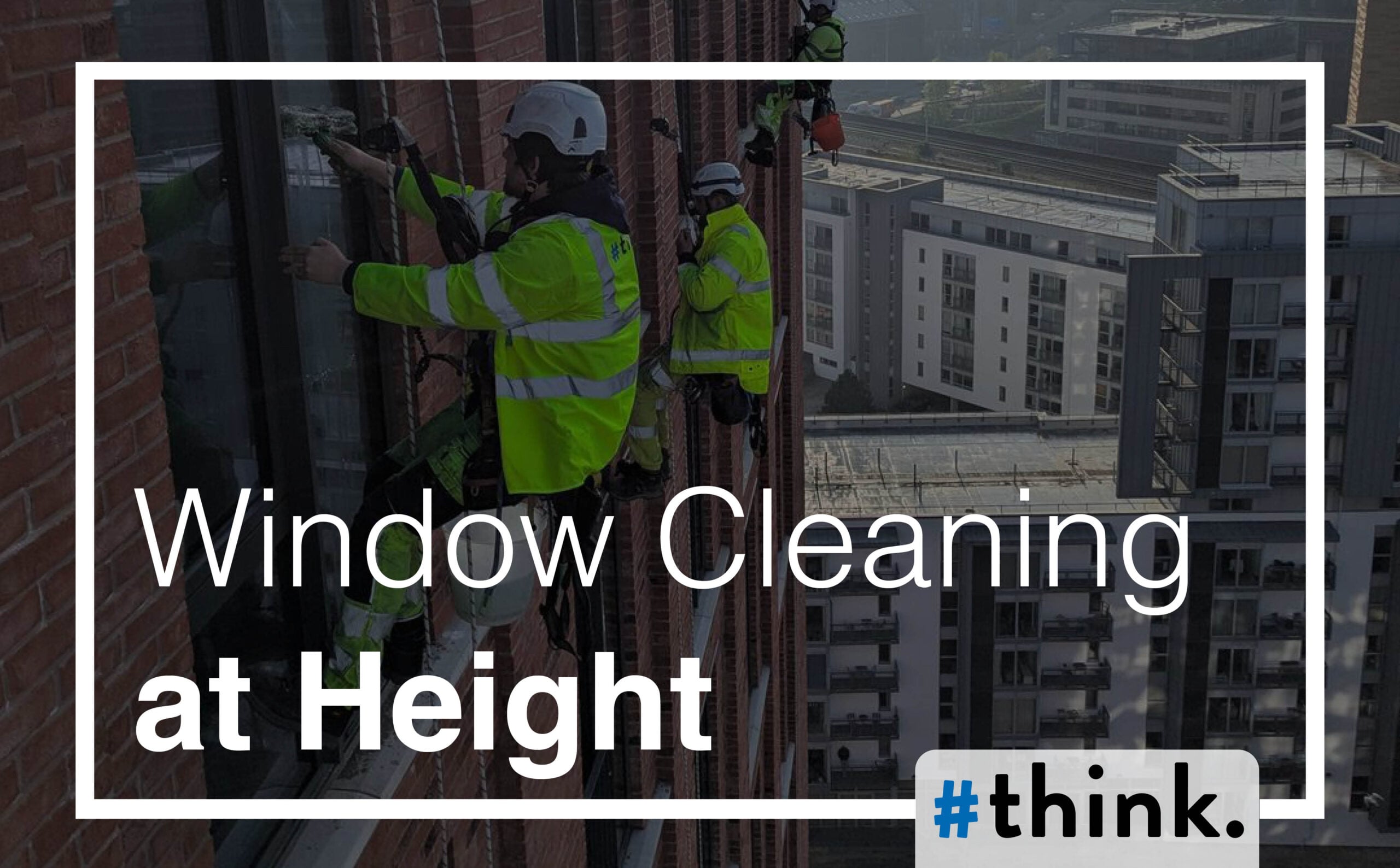
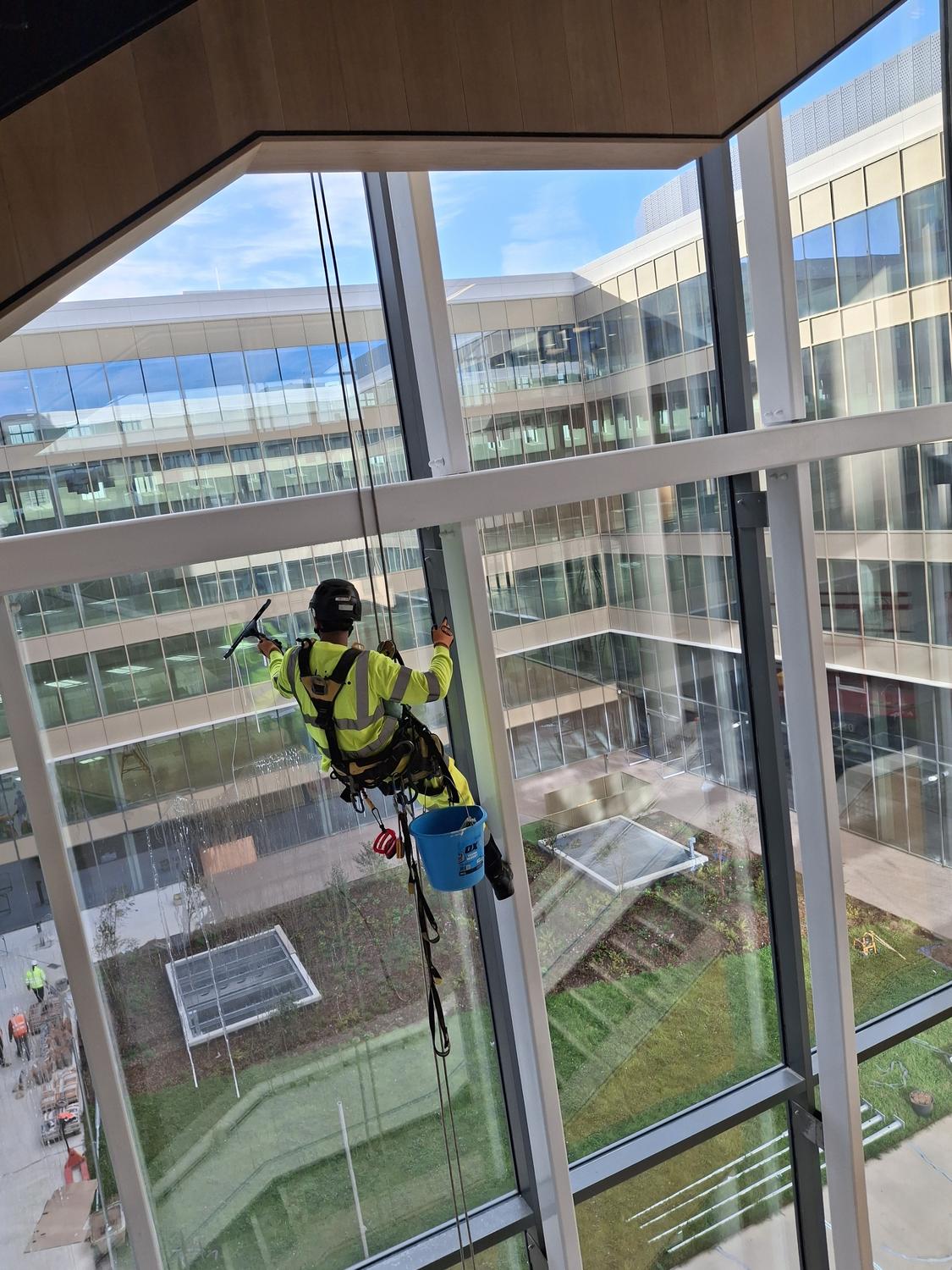
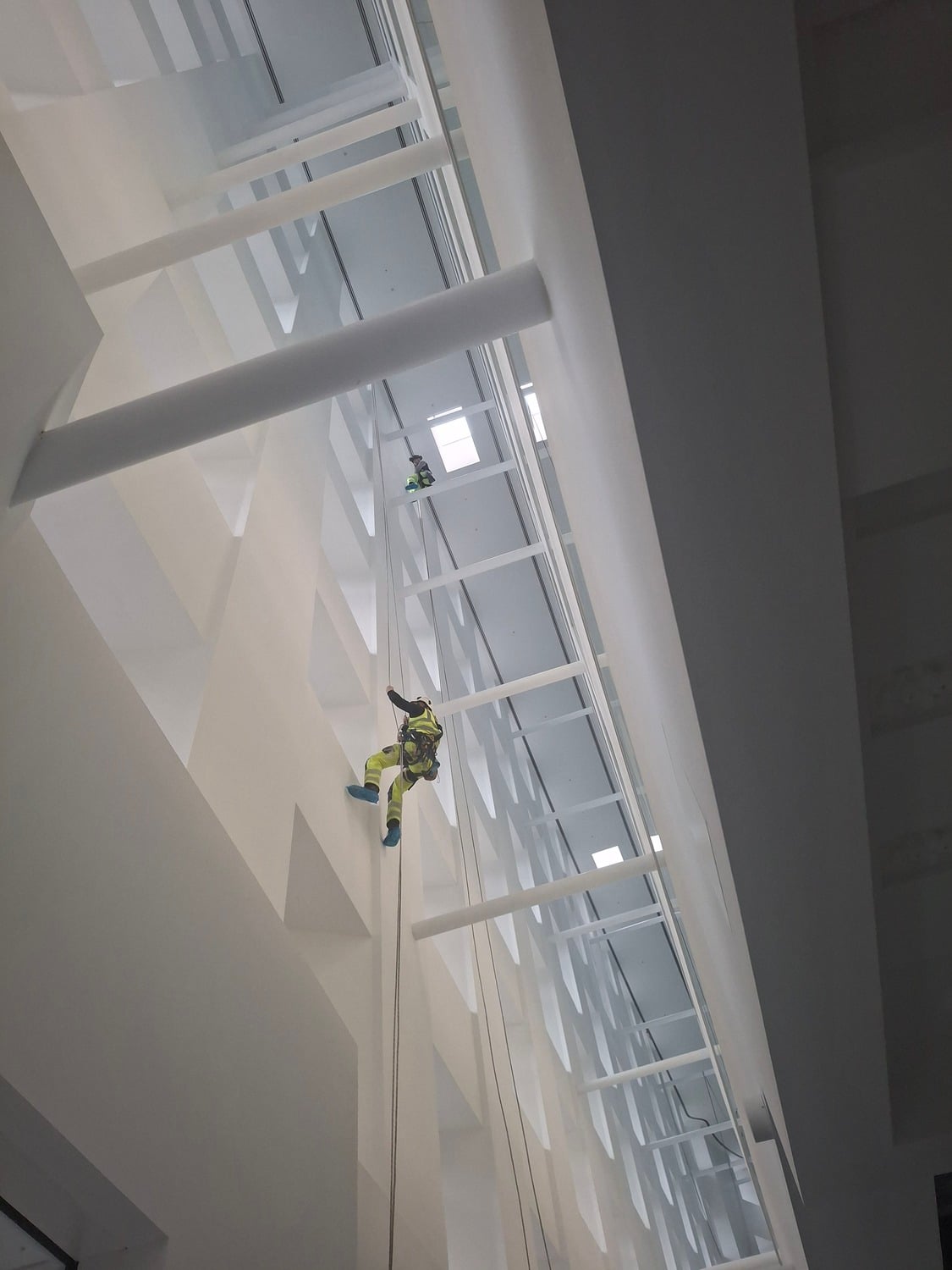
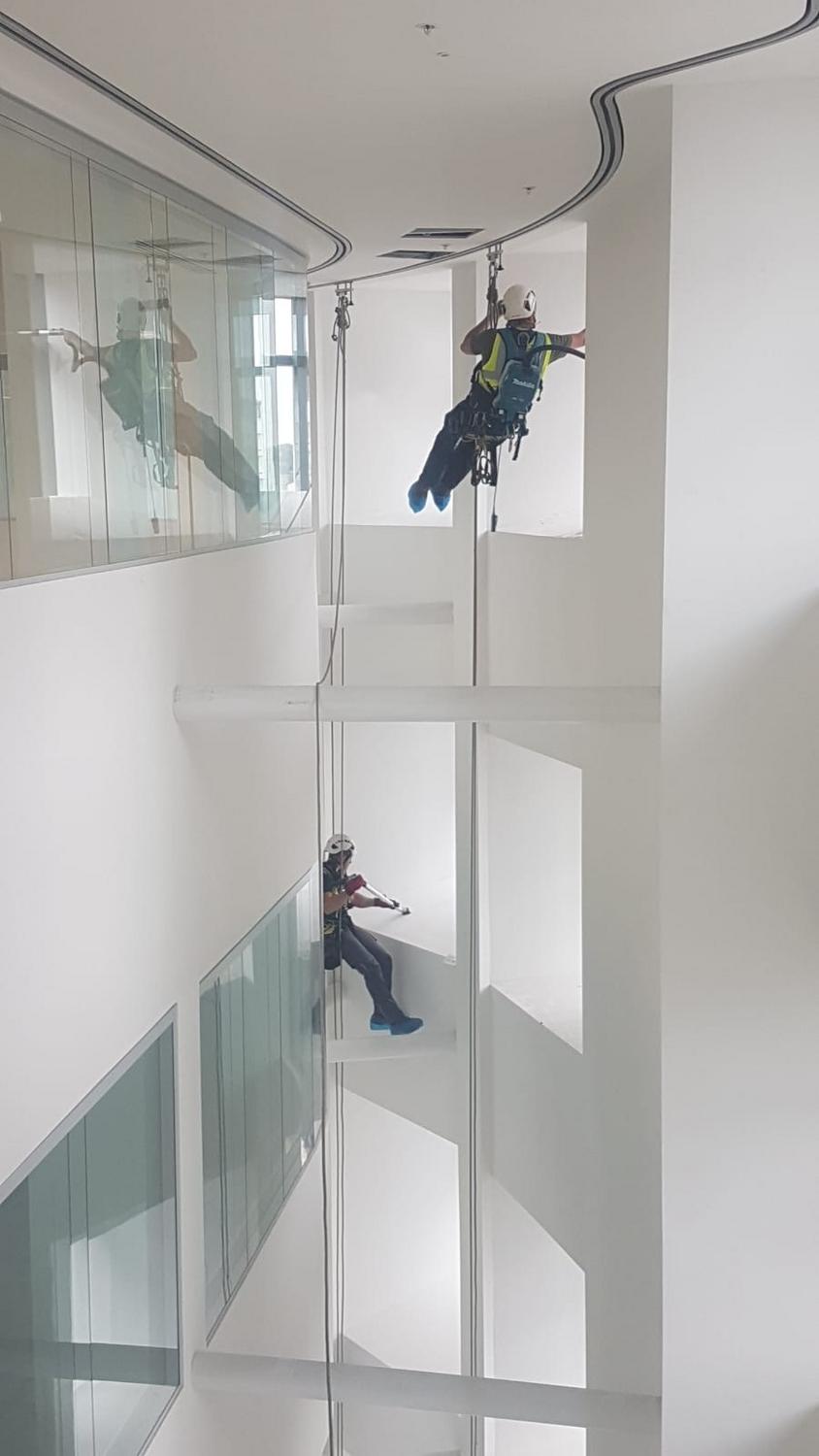
- Internal window cleaning via the RS162 abseil monorail system, accessing the system from the landing area at the top of the internal staircase
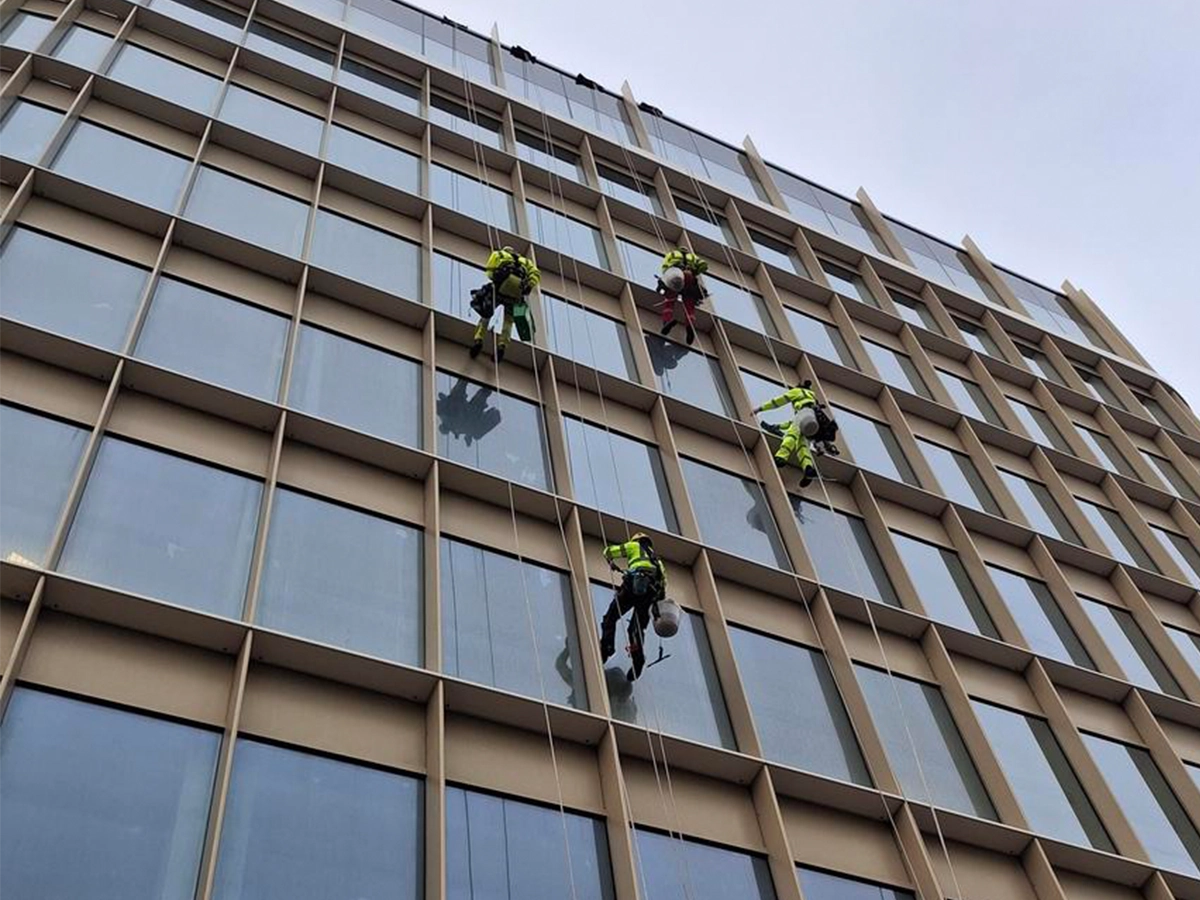
- External window cleaning via EN795 anchor points located at roof level, with exclusion zones erected at ground level using Chapter 8 barriers and signage
- Windows cleaned using traditional tools including mop, squeegee and window scraper, with all sills and frames wiped down on completion
- Truck-mounted MEWP deployed for external window cleaning and associated tasks on external elevations
- Client-supplied mobile vertical MEWP (scissor lift) deployed for internal window cleaning and associated tasks
Sprinkler repair support works
- Access via RS162 internal monorail following site induction and permit-to-work requirements
- The sprinkler zone was confirmed and isolated by the specialist sprinkler contractor before any work began
- A small access hatch was cut in the ceiling adjacent to the sprinkler head using suitable tools, taking care to avoid damage to surrounding services or finishes
- The sprinkler head nut was tightened under the direct instruction of the specialist sprinkler contractor, who then retested the system
- Once the repair was confirmed, the ceiling was patched using tape, filler and sanding techniques before repainting with client-supplied paint
Pigeon guano clean-down
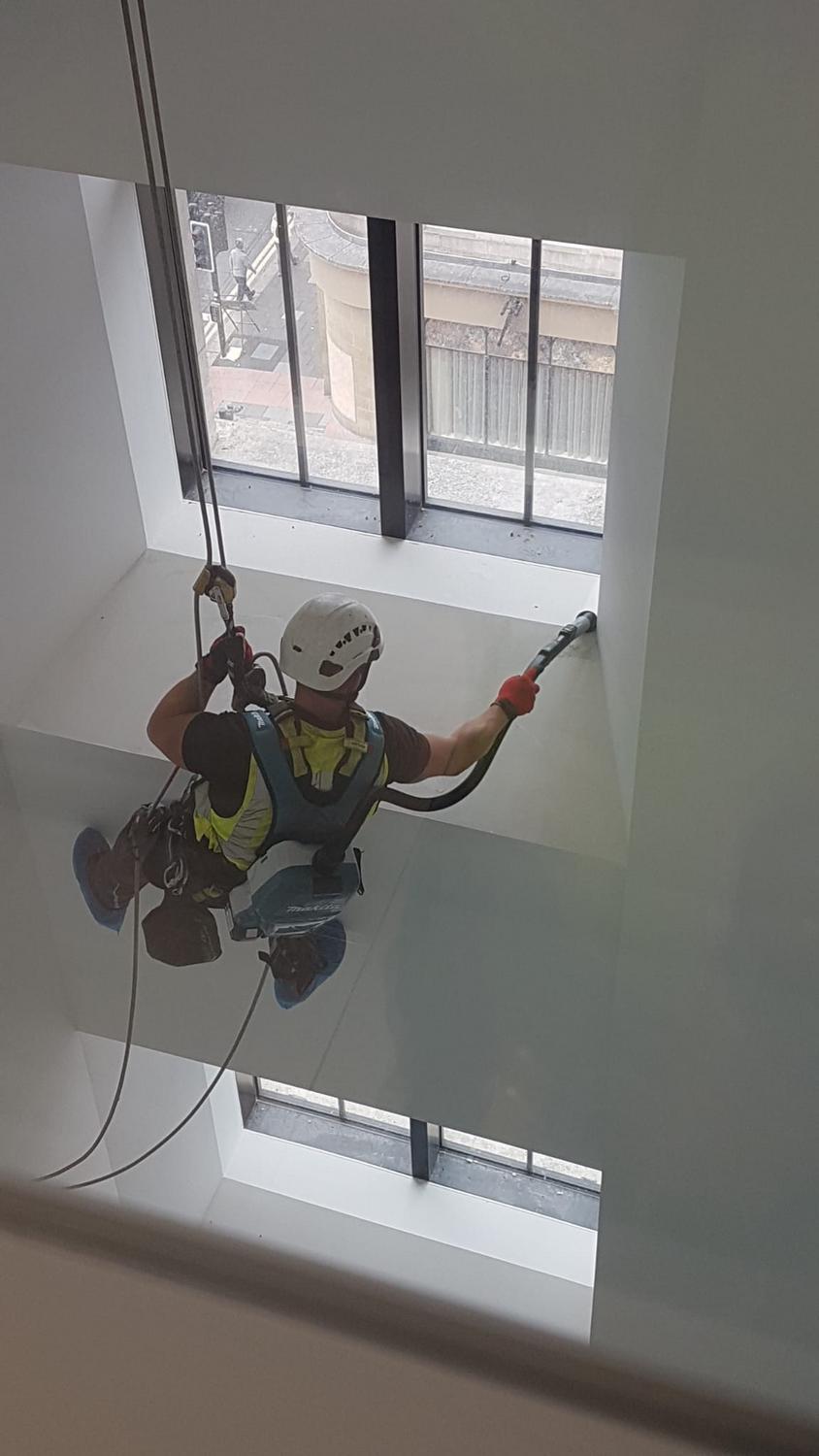
- Access to contaminated internal structural beams via the RS162 internal monorail system
- Exclusion zones erected beneath the work area using Chapter 8 barriers and rope access signage
- All operatives wore full PPE throughout, including FFP3 masks, disposable overalls, nitrile gloves and safety glasses
- Guano pre-soaked with an approved biocide solution in accordance with COSHH requirements to prevent airborne dust prior to removal
- Waste collected into heavy-duty bags, double-bagged, sealed and disposed of in accordance with hazardous waste regulations
- Decontamination procedures followed by all operatives on completion
Repainting of internal beams
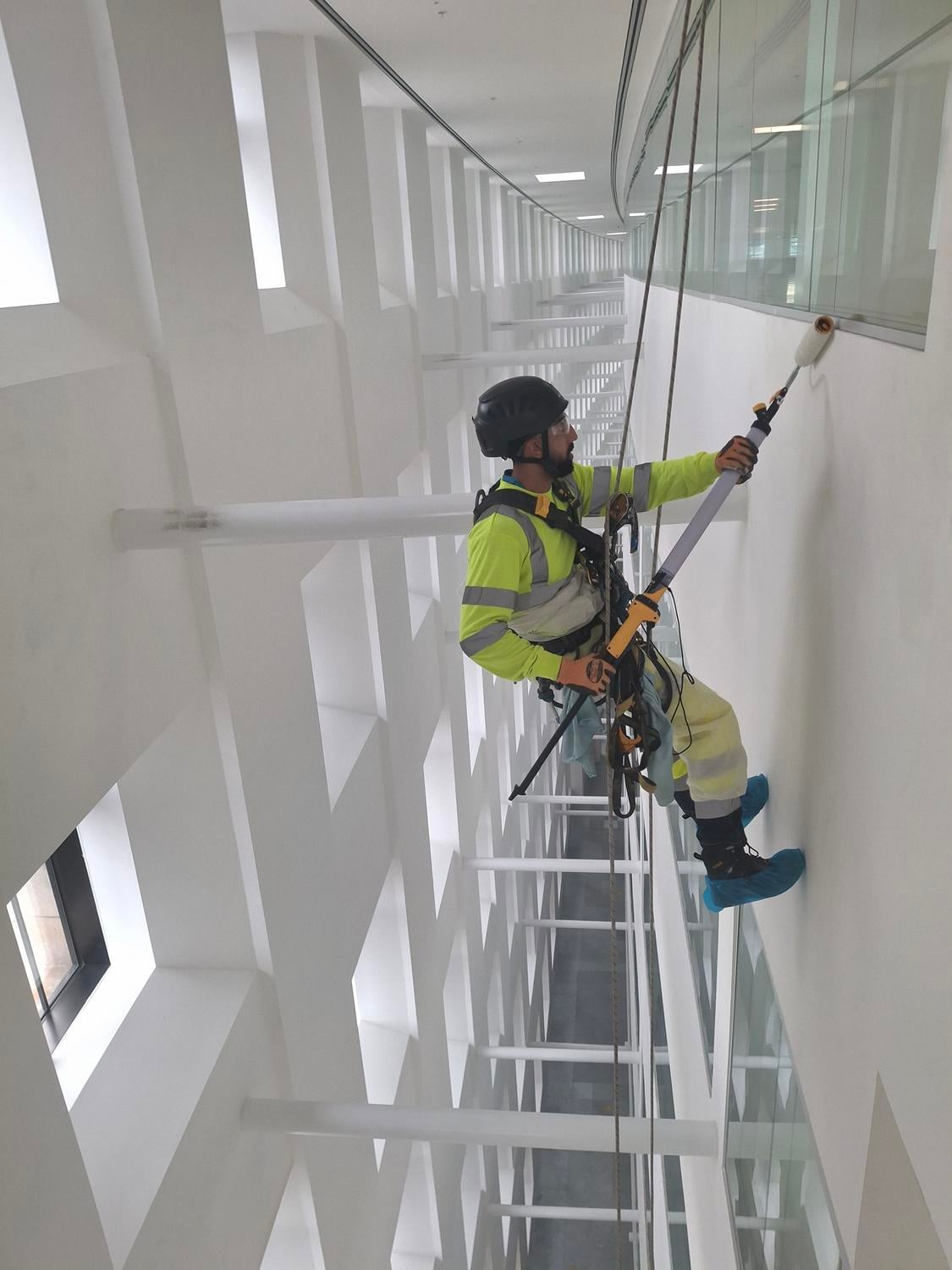
- Following guano clean-down, repainting of the treated beams was carried out via the RS162 internal monorail system
- Client-supplied paint applied in accordance with the manufacturer’s instructions
- Adequate ventilation maintained throughout; all paint containers, brushes and tools secured at height using tool lanyards
- Drop sheets positioned beneath the work area where practicable; exclusion zones remained in place until paint was dry
Internal snagging and repair works
- Remaining repair requiring a new board was identified and reported to the principal contractor on the final day of works
- Leak damage to internal wall surfaces identified on site; affected areas filled and sanded down
- Repairs built up progressively over multiple visits using filler, with sanding and painting carried out once repairs were sufficiently cured
- Snagging of the internal areas continued across several days, with the team working carefully to avoid damage to adjacent paint work during the window cleaning phase
Execution:
Site access was established on arrival each day, with all operatives completing daily task sheets before works commenced and submitting countersigned timesheets at the end of each shift. All RAMS documentation was accessed, reviewed, and signed onto via the GetKonnected digital platform prior to any works starting, ensuring full compliance and a consistent audit trail.
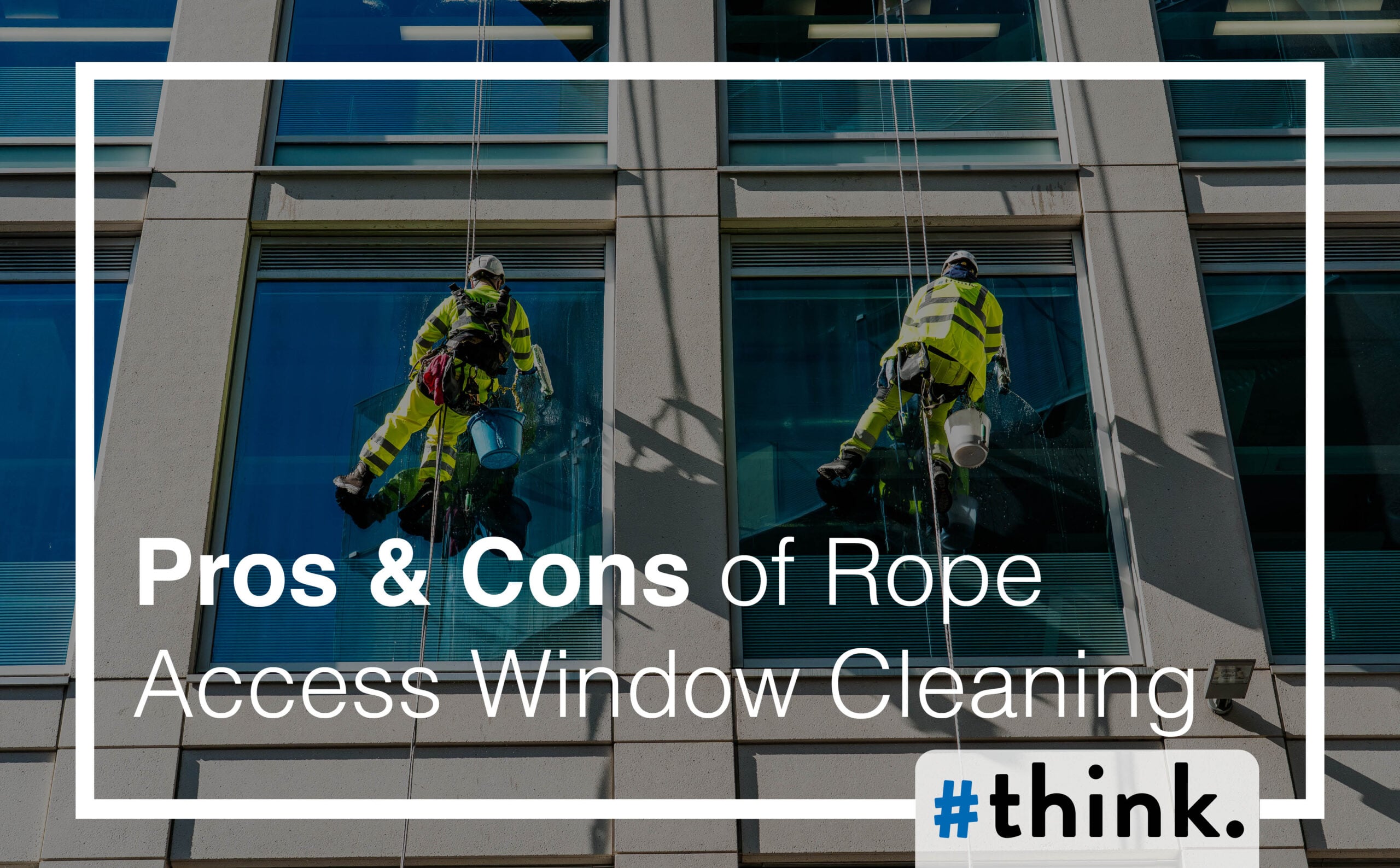
External window cleaning works commenced in August 2025 using our own Multitel truck‑mount MEWP, allowing the team to efficiently reach the high-level glazed elevations while maintaining maximum control over access arrangements. IRATA-qualified rope access technicians supported areas where the MEWP could not achieve optimal positioning, ensuring safe, efficient coverage of the full atrium façade. The front atrium was cleaned progressively across multiple days, with operatives working methodically across each glazed section. Minor delays due to on-site access constraints—including blocked stairways and slow lift movements—were managed dynamically and did not impact the overall programme.
Sprinkler repair support works began on 11 August 2025, coordinated closely with the specialist sprinkler contractor. An initial access hatch was cut in an incorrect location following instruction; a second hatch was then opened in the correct position, allowing the team to identify the leak. The defective pipe section required removal and replacement, which involved awaiting full system drainage and the contractor’s completion of the new pipe installation and subsequent pressure testing. Once the pressure test was completed at 14:40 on 12 August 2025, the team gathered materials and reinstated the first ceiling opening, with the second, more complex reinstatement completed the following day.
Internal snagging works took place over several days in December 2025. These included internal window‑cleaning snagging—completed with particular care around newly painted finishes—as well as progressing the Carliol wall repair works over three consecutive days. Filler was applied on 9 December, additional build-up and refinishing completed on 10 December, followed by sanding and painting on 11 December. A final half‑day visit on 12 December completed the remaining accessible decorations and identified one further repair requiring additional attention, which was reported to the principal contractor before all equipment was removed from site.
All site activity across the full programme was recorded daily through the GetKonnected digital platform, with digital client sign‑off captured at the completion of each phase to maintain transparent, real‑time project documentation.
.
Safety & Compliance:
All works were carried out in accordance with RAMS T360 RAMS 2038 (Revision 4) and the relevant Think 360 safe systems of work. The site was not under CDM control. Key controls in place throughout the programme included:
- Daily task sheets completed at the start of each shift; daily timesheets countersigned by a site representative at the end of each day
- Exclusion zones established at ground level beneath all rope access work areas, maintained until operatives had left the zone on completion of each drop
- Pre-use inspections of both MEWPs carried out daily, with LOLER certificates and check sheets verified before use
- Visual and tactile inspection of EN795 anchor points and RS162 monorail traveller carried out prior to each use
- All rope access rigging carried out by a Level 3 supervisor, with function checks and buddy checks completed before suspension
- Full PPE requirements observed throughout, including harness and short lanyard for MEWP basket occupants
- COSHH controls applied during guano clean-down, including biocide pre-treatment, full respiratory and skin protection and hazardous waste disposal
- Sprinkler zone isolated and confirmed by specialist contractor before any ceiling work commenced
- All tools secured at height using rated lanyards in accordance with SSOW02-03
Conclusion:
This project demonstrates Think 360’s capability to deliver complex, multi-activity window cleaning and maintenance programmes at a live occupied commercial facility. The team managed a scope that grew significantly from the original window cleaning brief to include hazardous guano clean-down, beam repainting, sprinkler repair support and internal snagging repairs, coordinating effectively with third-party contractors and adapting to on-site conditions throughout. All activity was completed to the required standard with full client sign-off captured digitally across the programme